
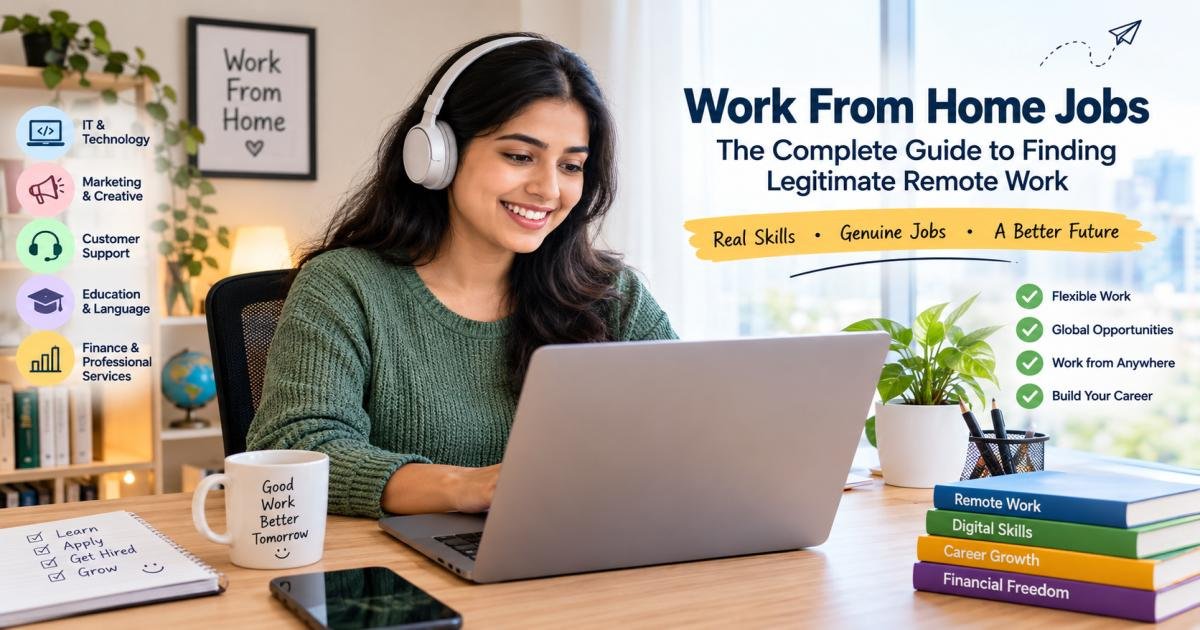

Work from home jobs let you earn money using a computer and the internet without commuting to an office. Real companies hire people for customer support, writing, software work, teaching, and many other roles that you can do from your house. This guide shows you exactly how to find legitimate ones, check employers, prepare your applications, and succeed once you start.
What Are Work From Home Jobs?
Work from home jobs are paid positions where you complete tasks from your own space. You join meetings online, reply to messages, deliver projects, or help customers through chat, email, or calls.
Work from home roles differ from hybrid jobs. Hybrid work mixes office days with home days. Fully remote work means you never need to visit an office. Some companies call a job “remote” but still limit who can apply by country or time zone.
Full-time work from home jobs usually come with fixed pay and benefits. Part-time roles give fewer hours. Freelance and contract work pay by project or hour, and you handle your own taxes. Flexible setups let you choose most of your schedule, but the company still sets deadlines.
Location rules matter. A company based in the United States may accept applicants only from certain countries for tax reasons. Time zones also affect daily work. If the team works mainly in one region, you may need overlapping hours even if the job is remote. “Remote” does not always mean you can work from any country or city. Always read the location details before you apply.
Also Read: Which is Colder: Minus 40°C or Minus 40°F? The Real Answer Explained
How to Find Legitimate Work From Home Jobs
Start with a clear plan. First, define your skills and goals. Write down what you already know how to do well—writing, basic coding, customer service, design, teaching, or organizing information. Decide if you want steady full-time pay, part-time flexibility, or project-based freelance work. Set a realistic income target based on your experience and location.
Next, choose the type of role that fits those skills. Beginners often start with customer support or virtual assistant work. People with technical skills look at software or data roles. Focus on one or two targets so your applications stay strong.
Search only on known platforms. Visit company career pages directly when a listing looks good. Read every job description carefully. Real postings list clear duties, tools you will use, and basic requirements. Vague promises of high pay with almost no work signal trouble.
Best Work From Home Jobs by Career Category
Technology and IT roles include software developers, data analysts, and IT support staff. These jobs often pay higher once you have solid skills and a track record of projects. Marketing and creative work covers content writers, digital marketers, graphic designers, and social media managers. A clear portfolio of past work usually matters more than a formal degree. Customer and administrative roles include customer service representatives, virtual assistants, and data entry specialists. Many companies train new hires for these positions.
Education and language roles include online tutors and English teachers. Platforms supply the classroom tools, and you teach students from different countries. Finance and professional services cover bookkeepers, accountants, recruiters, and project managers. Relevant experience or certifications improve your chances.
Best Work From Home Jobs for Beginners and Freshers
Many remote roles accept people with limited experience. Customer support, virtual assistance, data entry, junior content writing, and basic social media help are common starting points.
Employers typically look for clear writing, basic computer skills, reliability, and the ability to learn new tools quickly. You can show these skills through school projects, volunteer work, or personal practice even if you have never worked remotely before.
Entry-level roles worth targeting include chat support, email customer service, and junior virtual assistant positions. Expect training periods and performance checks. Pay starts lower and rises as you gain experience. Competition exists, so steady applications over several weeks usually work better than a single burst of effort.
Work From Home Jobs Without Experience: Where Should You Start?
Build basic digital skills first. Learn Google Workspace or Microsoft Office, simple spreadsheets, and tools like Zoom or Slack. Create sample work. Write a few short articles, design basic graphics, or prepare a sample research summary. Even practice pieces help. Update your resume and LinkedIn profile. List tools you know and any results from past projects or studies. Apply to suitable entry-level openings. Customer support and virtual assistant roles often accept strong communicators with little formal background. Take small legitimate freelance projects when possible. They build experience and give you material for a portfolio. Skip any offer that promises high pay for almost no skill or effort. Those seldom turn out to be real.
Also Read: Instagram Free Photo Like: Complete Guide for 2026
Best Websites and Platforms to Find Remote Jobs
Global platforms that list many remote roles include We Work Remotely, Remote OK, FlexJobs, Remotive, Himalayas, and LinkedIn. Upwork and similar sites work well for project-based work. Filter for fully remote positions and check location rules on every listing.
In India, Naukri, Internshala, Indeed India, and LinkedIn remain widely used. Internshala lists many openings suited to students and freshers.
You can also search Google with phrases such as “work from home jobs customer support” or “remote virtual assistant jobs India.” Always open the company’s official careers page instead of clicking random ads.
How to Tell If a Work From Home Job Is Legitimate
Genuine remote jobs show clear signs. The company runs a professional website with real contact details and an About section. The job description lists specific duties and tools. Recruiters use company email addresses. The hiring process includes video interviews. No one asks you to pay money to start. The same role appears on the company’s own careers page.
Watch for warning signs. Any request for money for training or equipment is a red flag. Extremely high pay for simple work with no experience is another. Vague descriptions, pressure to decide fast, communication only on WhatsApp or Telegram, or early requests for bank details or ID all point to scams.
How to Research a Remote Employer Before Applying
Visit the official company website yourself. Look for team information and a careers section. Confirm the recruiter’s email matches the company domain. Search the company and the recruiter on LinkedIn. Real companies show employees and recent activity.
Compare the listing with the careers page. If the job is missing there, contact the company through its official channels. Read independent reviews on more than one site. Check for patterns of complaints. Confirm the role is truly remote and note any location limits.
How to Create a Resume for Work From Home Jobs
List skills that matter for remote work: clear writing, time management, self-motivation, and tools such as Slack or Zoom. Match the resume to the job description. Use some of the same wording the employer uses, but keep the language natural. Show results. Write “handled 40 customer tickets a day with high satisfaction scores” instead of “did customer service.” Name the software and tools you know. Describe freelance, project, or volunteer work as real experience and include the outcomes. Keep the format clean so both people and tracking systems can read it easily.
How to Build a Strong Remote-Work Portfolio
Writers include published articles or sample blog posts. Designers show graphics or website mockups. Developers share working projects or code samples. Marketers display campaign results or sample posts. Virtual assistants can prepare sample schedules or research summaries.
Beginners create credible samples by choosing a realistic task and completing it well. Free tools make this possible. Proof of what you can deliver often carries more weight than a long list of claimed skills.
How to Apply for Work From Home Jobs Successfully
Before you apply, research the company and customize your resume and short introduction. Explain why the role fits you and how you work independently.
During interviews, test your camera and microphone first. Answer clearly and ask practical questions about the team and daily tools. Send a short thank-you note afterward.
Essential Skills for Success in Remote Work
Technical skills include basic computer use, internet research, email and chat tools, video calls, and any software specific to the job.
Soft skills include clear communication, time management, self-discipline, problem-solving, and the ability to work alone while still updating your team.
How Much Can You Earn from Work-From-Home Jobs?
Pay depends on the role, your experience, the employer’s location, and whether the work is full-time or freelance. Entry-level customer support or virtual assistant roles typically start lower. Specialized technical roles such as software development or data work often pay more. In India, local remote roles usually follow domestic salary ranges. Work for international companies can bring higher pay, sometimes in foreign currency, but taxes and transfer fees apply.
Full-time jobs offer steadier income and benefits. Freelance work can earn more per hour yet requires constant client search and self-managed taxes. Always verify advertised ranges during the interview. Ask what a realistic figure looks like for someone with your background.
Work From Home Jobs in India: What You Should Know
Common remote categories in India include IT, customer support, content writing, digital marketing, online teaching, and virtual assistance. Indian companies often follow local hours and pay structures. International employers may pay more but expect some overlap with overseas time zones and strong English communication.
Clarify whether the role makes you a full employee or a contractor. Understand how payment arrives and what taxes you must handle.
Verify employers through LinkedIn, company websites, and review sites. Never share Aadhaar, PAN, or bank details before a formal written offer. Students and freshers can start with platforms that list internships and entry-level remote roles. Focus on communication skills and small portfolio pieces.
Work From Home Jobs for Different Types of Job Seekers
Students often take part-time tutoring, writing, or virtual assistant work that fits around classes.
Freshers target customer support, data entry, junior virtual assistance, and entry-level writing or marketing roles. Academic projects and internships help demonstrate readiness.
Freelancers specialize in one skill, collect client reviews, and raise rates over time. Each project also becomes portfolio material.
Remote Work Setup: What Do You Actually Need?
A stable internet connection ranks first. Keep a mobile data backup ready. A reliable laptop that handles video calls and the required software comes next. A headset with a clear microphone and a working webcam improves communication. A quiet corner dedicated to work helps focus, even in a small home. Basic security habits matter: strong passwords, two-factor authentication, and updated software.
How to Stay Productive While Working From Home
Set regular start and end times. Close the laptop at a set time. Establish clear boundaries between work and personal life. Silence non-work notifications during focused blocks. Break large tasks into smaller steps and track deadlines with a simple list or free tool. Update your team early when something changes. Take short breaks and protect free time to avoid burnout.
Common Mistakes to Avoid When Looking for Remote Jobs
Sending the same application to every opening wastes effort. Tailor each one. Accepting salary claims without checking leads to disappointment. Paying any alleged employer for training or equipment is almost always a scam. Ignoring location limits means you may apply for roles you cannot accept. A thin resume or missing portfolio makes it harder for employers to see your value. Skipping company research raises the chance of scams or poor-fit jobs. Expecting results in a few days creates unnecessary frustration. Consistent effort over weeks produces better outcomes.
Final Takeaway: How to Start Your Remote Job Search
Pick one realistic target role that fits your current skills. Build the skills and sample work employers want to see. Search only verified platforms and company career pages. Research every employer before you apply or share details. Send tailored applications and communicate clearly. Stay consistent and careful. Legitimate work-from-home jobs exist for people who search steadily and check thoroughly. Begin with one concrete step today—update your resume, create a short sample, or set alerts on two trusted platforms. Steady effort and careful checking lead to real remote work that fits your life.
FAQs
What are the best jobs that can be done from home?
Roles that match your skills work best. Popular legitimate options include customer support, virtual assistance, software development, content writing, digital marketing, online tutoring, and bookkeeping.
Are work from home jobs legitimate?
Yes. Millions of people work remotely for real companies. Careful checking of each opportunity separates genuine roles from fakes.
How can I find genuine remote jobs?
Use known platforms, visit company career pages, research employers, and watch for the clear warning signs listed earlier.
Which work-from-home jobs offer the highest pay?
Specialized technical roles such as software engineering, data work, and senior marketing positions typically pay higher. Experience level and whether the employer is local or international also affect pay.
What are the best remote jobs for beginners?
Customer support, virtual assistant, data entry, junior content writing, and basic social media roles are common starting points.
How can I avoid scams when working from home?
Never pay money to start a job. Verify the company website and recruiter email. Walk away from offers that sound too good to be true. Research before sharing personal details.
Do remote jobs require a degree?
Not always. Many roles in support, writing, design, and assistance emphasize skills and portfolio over formal degrees. Technical roles more often prefer relevant education or proven experience.



[…] Also read: Work From Home Jobs: The Complete Guide to Finding Legitimate Remote Work […]
[…] in past interviews. He never turned the story into publicity material. The couple built a calm home life while his career moved from bank work to directing major […]
[…] legitimate free method works instantly. Free growth comes from content, engagement and […]
[…] qualify for it, are the rewards worth chasing, or would a paid premium card serve you better? This guide works through all three, using the card’s current 2026 terms rather than older figures still […]