
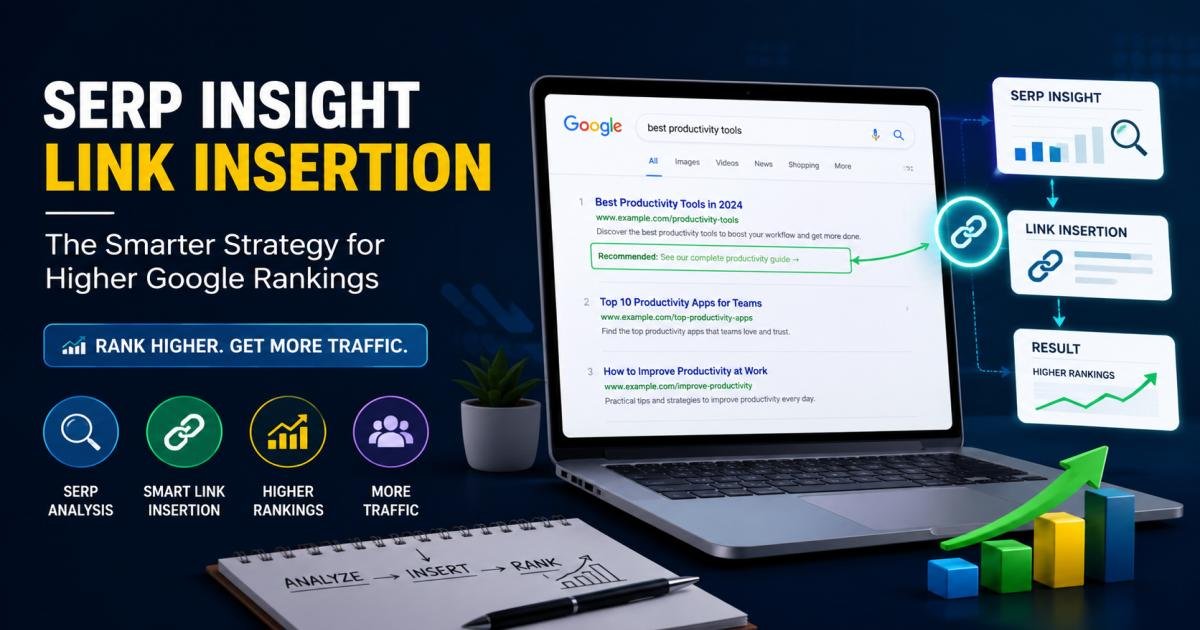

Placing targeted links inside content that Google already trusts accelerates your search ranking timeline. SERP insight link insertion bypasses the slow process of publishing new articles. Instead, you identify active, top-tier pages and embed a contextual link directly into their existing paragraphs.
Search engine bots crawl established URLs roughly three times more often than fresh pages. By injecting your target link into these active zones, you transfer page authority rapidly. This method works effectively for both internal site structuring and external webmaster outreach, providing a highly efficient path to organic growth.
What Is SERP Insight Link Insertion?
Definition and Core Concept
At its core, SERP insight link insertion means analyzing search engine results pages to locate live, authoritative content, then embedding a contextual link into that text. You modify active pages rather than starting from scratch.
How It Combines SERP Analysis with Link Insertion
Standard link building often looks at broad domain metrics. This tactic targets specific page-level success. You run a search query for your target keyword to find pages ranking in positions 1 through 20. After confirming the specific page receives real organic search visibility, you secure a logical spot and embed your link.
Why Search Professionals Use This Strategy
Drafting a 2,000-word piece typically takes up to eight hours and costs hundreds of dollars. Embedding a link takes only minutes. Search managers rely on this tactic because it slashes content budgets by up to 70% while producing faster organic ranking improvements.
How SERP Insight Link Insertion Works
Analyze Search Intent from Google’s SERP
Review the first ten search results for your primary phrase. Notice if searchers want comparison tables, quick answers, or deep tutorials. Your target page must directly answer the exact search intent of the host article.
Identify High-Value Existing Content
Seek out pages holding steady traffic and solid positions for relevant terms. Ignore URLs showing downward traffic trends. Prioritize articles that receive frequent updates and active crawling from search bots.
Find Relevant Link Opportunities
Scan the chosen article for missing information. If a writer discusses “onsite speed optimization” but fails to list specific software, that gap provides a perfect placement opportunity for your detailed guide.
Insert Contextual Links Naturally
Embed the link within a complete, logical sentence. The anchor text must match the surrounding phrasing so readers experience a smooth transition rather than a jarring advertisement.
Monitor Rankings and Performance
Watch your position changes, referral visitors, and organic clicks once the link goes live. Most target URLs experience measurable ranking shifts within 14 to 30 days of a successful placement.
Why SERP Insight Link Insertion Is Important for Search Rankings
Improves Topical Authority
Search algorithms group websites by subject matter depth. When authoritative pages in your niche point to your site, search engines classify your domain as a highly credible resource on that topic.
Strengthens Internal Linking Structure
You can deploy this tactic strictly across your own domain. Find your highest-traffic pages using Google Search Console, then add internal links pointing to newer posts. This action pushes stored link equity throughout your site architecture.
Enhances User Experience
Readers value immediate access to supporting information. Adding relevant resources inside high-traffic content helps users find exact answers without returning to the main search engine results page.
Supports Better Crawlability and Indexing
Search bots visit top-tier pages constantly. Embedding your target link on these active pages guarantees bots will discover and process your URL quickly.
Benefits of SERP Insight Link Insertion
Higher Keyword Rankings
Receiving link equity from an established page sends a much stronger ranking signal than getting a link from a newly published, unindexed guest post.
Increased Organic Traffic
Climbing the search results generates more daily visitors. Additionally, you capture direct referral traffic from readers who click the link inside the host article.
Better Link Equity Distribution
This strategy lets you funnel authority directly to specific URLs that require a ranking push, preventing wasted link equity on dead or low-priority pages.
Faster Indexation
New content can sit for weeks before appearing in search indices. A link embedded on a frequently crawled page often forces indexation within 24 to 48 hours.
Lower Bounce Rate
Users arriving via contextually aligned links carry a high interest in your topic. They naturally read longer and explore more pages, driving down your average bounce rate.
SERP Insight Link Insertion vs Traditional Link Building
Key Differences
Standard methods require pitching ideas, waiting for publisher approval, and writing heavy content. SERP insight link insertion simply updates active content that already holds real search value.
Pros and Cons
| Feature | Traditional Guest Posts | SERP Insight Link Insertion |
| Creation Effort | High (Requires 1,000+ words) | Low (Requires 1–2 sentences) |
| Time to Index | Slow (Takes weeks to months) | Fast (Takes days to hours) |
| Page Authority | Starts exactly at zero | Uses pre-existing authority |
| Referral Traffic | Extremely low initial traffic | Generates immediate active traffic |
Which Strategy Delivers Better Long-Term Results?
While guest posts expand general brand awareness, inserting links into top-tier pages yields faster ranking shifts and a much higher return on time invested.
Types of Link Insertion in Search Strategy
Internal Link Insertion
Connecting pages across your own website to push authority from strong, high-traffic pages to weaker ones.
External Link Insertion
Contacting third-party publishers to embed your URL into their live, indexed articles.
Niche Edit Link Insertion
Targeting highly specific, industry-relevant articles to secure exact-match topic placements.
Contextual Link Placement
Placing the URL strictly inside body paragraphs, wrapped in relevant, topic-matched sentences.
Step-by-Step Process for Effective SERP Insight Link Insertion
Step 1: Perform SERP Analysis
Query your core target term. Document the top 20 ranking URLs. Skip your direct competitors and target resource hubs, industry news sites, and informational blogs.
Step 2: Identify Ranking Factors
Verify steady organic traffic and keyword rankings for each prospect using standard search software. Discard any domains with crashing traffic metrics.
Step 3: Audit Existing Content
Read the target text carefully. Spot outdated statistics, missing explanations, or weak sections where your URL adds undeniable value to the reader.
Step 4: Choose Relevant Anchor Text
Pick anchor phrases that read naturally. Rely on descriptive wording like “detailed campaign guide” instead of forcing exact-match commercial keywords.
Step 5: Insert Contextual Links
Email the site editor with a concise request. Propose a short text addition containing your link. Verify the live placement once approved and published.
Best Practices for SERP Insight Link Insertion
Match Search Intent
Verify that the host page and your destination URL address the same user problem. Mismatched intent drives up bounce rates and ruins trust signals.
Use Natural Anchor Text
Rotate your anchor phrases across different campaigns. Blend partial matches, brand identifiers, and plain descriptive text.
Link Only Relevant Pages
Secure placements strictly where topical alignment exists. A link from a smaller site in your exact industry outweighs a link from a massive, unrelated domain.
Avoid Over-Optimization
Never cram target keywords into sentences where they break natural grammar. Write strictly for human readers.
Update Older Content Regularly
When embedding internal links into your older articles, take time to refresh outdated data and rewrite stale paragraphs simultaneously.
Keep Links Valuable for Readers
Every embedded link must offer actual utility. The destination page must deliver the exact information promised by the clickable text.
Common Mistakes to Avoid
Irrelevant Link Placement
Embedding URLs on unrelated topics destroys user trust and negates link value.
Keyword Stuffing in Anchor Text
Reusing identical commercial anchor text repeatedly will trigger automated search spam filters.
Too Many Links on One Page
Placing links on pages stuffed with dozens of outbound URLs severely dilutes the equity transferred to your site.
Ignoring User Experience
Forcing awkward sentences into an article frustrates readers and decreases time-on-page metrics.
Using Low-Quality Pages
Skip private blog networks or websites with declining search visibility. High-quality placements always outperform bulk low-quality links.
Tools That Help with SERP Insight Link Insertion
Google Search Console
Highlights your strongest pages and target queries for optimal internal link mapping.
Google Analytics
Tracks incoming referral traffic and visitor behavior on your target landing pages.
Ahrefs
Analyzes page-level organic traffic, keyword positions, and backlink history for potential host URLs.
Semrush
Highlights competitive keyword gaps and overall domain visibility trends.
Surfer
Scans topic coverage and semantic phrasing to ensure your new sentences match the host page perfectly.
Clearscope
Formats and optimizes the surrounding text to maintain high readability scores.
How to Measure Success
Keyword Position Improvements
Monitor ranking shifts for target keywords over 30 days following the active placement.
Organic Traffic Growth
Check Google Analytics to verify consistent upward trends in daily organic visitors.
Click-Through Rate (CTR)
Review Google Search Console to confirm that higher rankings actually generate more clicks.
Internal Link Clicks
Set up event tracking to count exactly how many visitors click your embedded internal links.
Conversion Metrics
Measure the lead forms, newsletter sign-ups, or direct sales produced by referral and search traffic.
Real-World Example of SERP Insight Link Insertion
Initial Search Performance Challenges
A software company published a guide regarding “remote team project tracking.” After 90 days, the URL sat on page four, capturing fewer than 15 organic visits per month.
Strategy Implementation
The marketing team located a popular management blog featuring an article titled “Essential Tools for Distributed Teams.” The post held page-one rankings for multiple management terms. The team successfully pitched a two-sentence update containing a link to their tracking templates.
Results Achieved
Within 20 days, the software guide moved from position 38 to position 8. Organic traffic spiked by 340%, and the embedded link drove 85 direct referral visits during the first month.
Key Takeaways
Editing a single active, high-ranking page produces faster movement than writing multiple new guest articles.
Who Should Use SERP Insight Link Insertion?
Bloggers
Website owners can increase organic traffic rapidly without spending heavy capital on content production.
Search Specialists
Marketing professionals can demonstrate clear ranking improvements to clients within tight, predictable timelines.
Digital Marketing Agencies
Marketing firms can scale link operations efficiently while enforcing strict quality controls.
SaaS Companies
Software developers can position their products directly inside top-ranking buyer guides and resource lists.
Frequently Asked Questions (FAQs)
What is SERP Insight Link Insertion?
This tactic involves analyzing search engine results to locate top-ranking content and embedding a contextual link into that live text.
Is SERP Insight Link Insertion a White Hat Technique?
Yes, provided you act editorially. You must offer highly relevant, helpful text additions that genuinely improve the reader’s experience.
How Does It Improve Google Rankings?
It transfers link equity straight from established, trusted articles to your destination URL.
How Often Should You Update Existing Links?
Audit internal link placements every six to twelve months to verify that destination pages stay accurate and useful.
Can Beginners Use This Strategy?
Yes. Beginners should start by adding internal link insertions across their own websites before attempting external webmaster outreach.
Which Tools Are Best for SERP Analysis?
Ahrefs, Semrush, and Google Search Console supply the most accurate data for page traffic and keyword evaluation.
Does Link Insertion Work for New Websites?
Yes. Securing URLs on established pages forces search algorithms to discover and index new domains significantly faster.
Final Thoughts
SERP insight link insertion offers a structured, data-led way to build online authority and climb search results. By placing contextual links on pages that search engines already index and trust, you save time, improve site architecture, and drive real human traffic to your key pages. Focus on relevance, write clear, natural sentences, and choose high-value target pages to get the best results.



[…] intake of added sugar and salt is linked to higher risks of heart disease, high blood pressure, and diabetes. Reading labels and cooking more meals at […]